

Somatics.
Yin.
Restorative.
Yoga Nidra.
A 40-hour professional training in a progressive approach to movement, stillness and rest.

A progressive pathway towards rest.
SYRN brings together four complementary practices and places them in a deliberate sequence — moving from embodied awareness towards increasing stillness, support and conscious rest.
The value lies not only in each practice, but in understanding when to use it, what comes next, and how to guide the transition.
THE FOUR PRACTICES
Four distinct practices.
One considered progression.
Each stage changes the quality of effort, attention and support — creating a gradual movement towards stillness and rest.
Somatics
Slow sensory movement develops body awareness and offers somewhere practical to begin when complete stillness feels too far away.
Restorative
Props support the body so effort can reduce and the emphasis shifts towards comfort, support, breath and time.
Yoga Nidra
Guided conscious rest brings the sequence towards deeper stillness once the body has already moved through the preceding stages.
SYRN Method Intensive
40 hours of professional study. Five in-person training days. A small cohort of nine.
EARLY BOOKING
Secure your place with a £195 deposit, leaving £500 to pay.
Standard investment after the early-booking places: £795
Training, practice, discussion and teaching methodology.
Access to the SYRN Kajabi study library and recorded teaching.
Reading, practice, reflection and sequence design.
With the option to continue into the 80-hour Practitioner pathway.
Interested, but want to talk it through first?
Talk to Bryony →Looking for a full yoga teacher qualification?
The 200-hour Yoga Teacher Training is the foundational route for those who want to qualify as a yoga teacher.
SYRN is a specialist continuing education program in Somatics, Yin, Restorative Yoga, and Yoga Nidra.
Professional training — or a deeper experience for yourself.
There are two ways into SYRN this autumn: join the full professional pathway, or come for the first three-day immersion simply to experience the method in your own body.
PROFESSIONAL PATHWAY
For people already working with movement, yoga or wellbeing.
- Qualified yoga teachers
- Yoga teachers currently completing professional training
- Pilates, somatic and movement teachers
- Meditation teachers and wellbeing practitioners
- Experienced practitioners considering specialist professional study
WHAT YOU'LL TAKE AWAY
A method you can understand, adapt and teach with confidence.
- The complete SYRN framework
- Specialist study in Somatics, Yin, Restorative Yoga and Yoga Nidra
- More confident sequencing, pacing and transitions
- Your own SYRN-informed sequences and teaching resources
- A clear route into the full 80-hour SYRN Practitioner pathway
COMING FOR YOURSELF?
Join the first three days as a Personal Immersion.
You do not need to be a teacher. Come to experience SYRN for yourself, learn more about your own patterns of tension and rest, and spend three days immersed in movement, stillness, support and guided practice.
This route is for personal study and does not include a teaching certificate. If you decide you want to continue professionally, you can upgrade into the full 40-hour Intensive and complete the November module, online study and assignments.
Book the Personal Immersion · £350The 40-hour Intensive gives you specialist training you can begin integrating into your existing teaching, within your professional scope.
Complete the full 80-hour pathway, including mentored teaching and assessment, to become a certified SYRN Practitioner.
The cohort is deliberately small, with space for questions, discussion, practice and individual guidance throughout.
Learn it.
Practise it.
Teach it.
The October–November Intensive is a complete 40-hour training in its own right. If you want to continue professionally, it also forms the first half of the full 80-hour SYRN pathway.
40 HOURS
Learn the method
Study and experience the complete SYRN framework: Somatics, Yin, Restorative Yoga and Yoga Nidra, together with sequencing, theory, language and application.
+ 40 HOURS
Practise professionally
Move from understanding the method to applying it through mentored teaching, observation, advanced study, sequence design and supervised practice.
80 HOURS COMPLETE
Become a SYRN Practitioner
Demonstrate that you can design, adapt and teach the method with skill, appropriate professional scope and a clear understanding of the principles behind it.
You do not need to decide now whether you want to complete the full 80-hour pathway. Begin with the Method Intensive and continue if the professional route feels right for you.
What will I be able to teach?
That depends on where you are starting from and how far you choose to take the training.
PERSONAL STUDY
I’m coming for myself
+
Join the October Personal Immersion to experience the method in your own body and deepen your understanding of movement, stillness and rest.
No teaching certificate is included with this route. If you decide you want to continue professionally, your £350 can be credited towards the full 40-hour training, subject to availability.
40-HOUR INTENSIVE
I’m already a qualified yoga teacher
+
The 40-hour Method Intensive provides specialist training in Somatics, Yin, Restorative Yoga and Yoga Nidra.
As an existing yoga teacher, you can begin integrating these approaches into your teaching within your existing professional scope and insurance arrangements.
You can also continue into the second 40 hours for mentoring, supervised teaching and full SYRN Practitioner certification.
80-HOUR PATHWAY
I teach Pilates, movement, somatics or wellbeing
+
The full 80-hour pathway is the professional route for practitioners coming from another relevant movement, meditation or wellbeing discipline.
It includes the complete SYRN Method Intensive followed by mentored teaching, observation, sequence design, supervised practice and assessment.
On successful completion you can be certified as a SYRN Practitioner and teach the practices and sequences within the SYRN method, working within your professional scope and appropriate insurance requirements.
SYRN is specialist professional education. It does not replace a full foundational yoga teacher training.
Explore the 200-hour training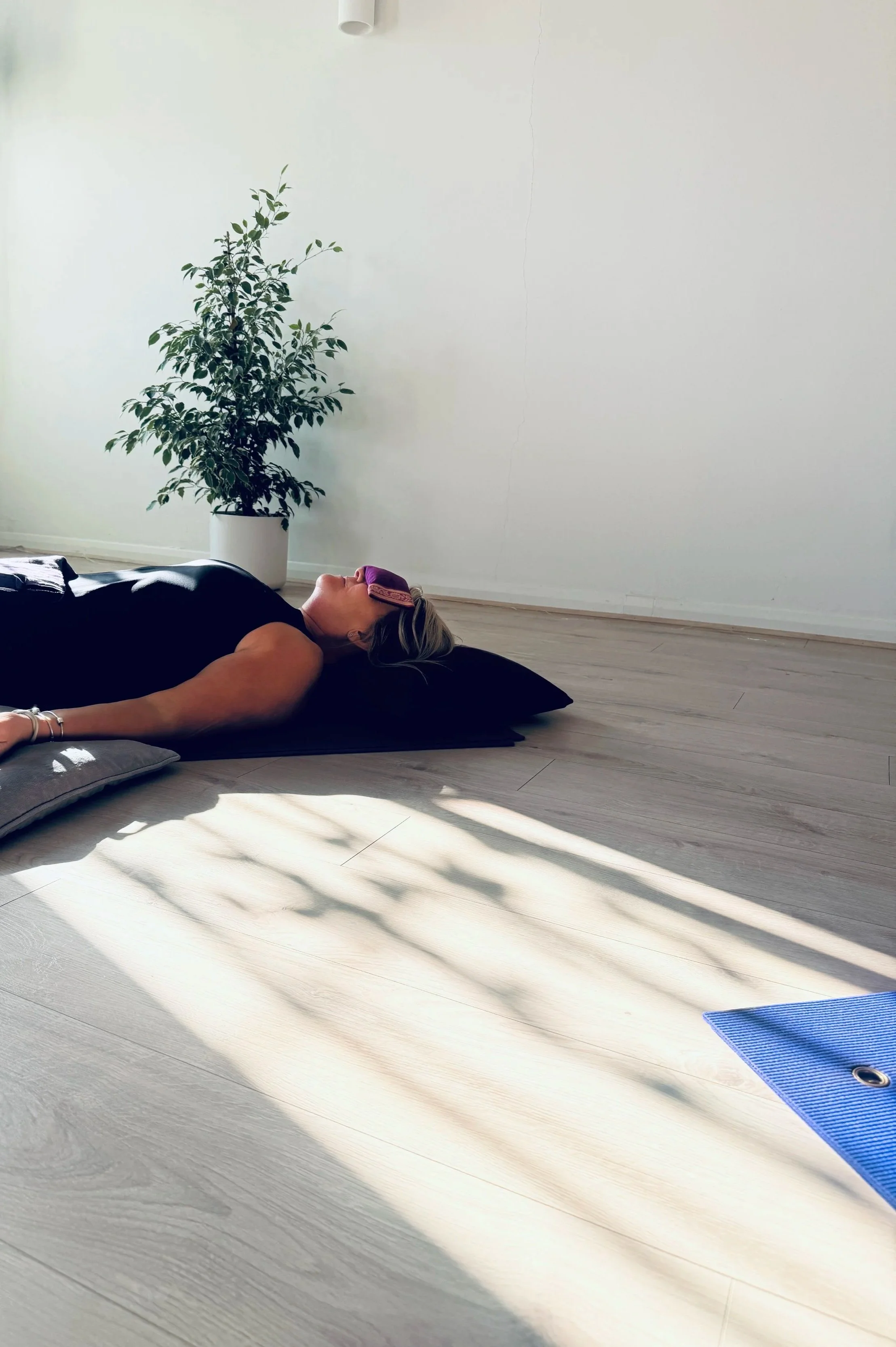
Why I created SYRN.
A short introduction to the method, how the four practices work together, and why the progression matters.
Somatics → Yin → Restorative → Yoga Nidra
Come for the learning.
Stay for the experience.
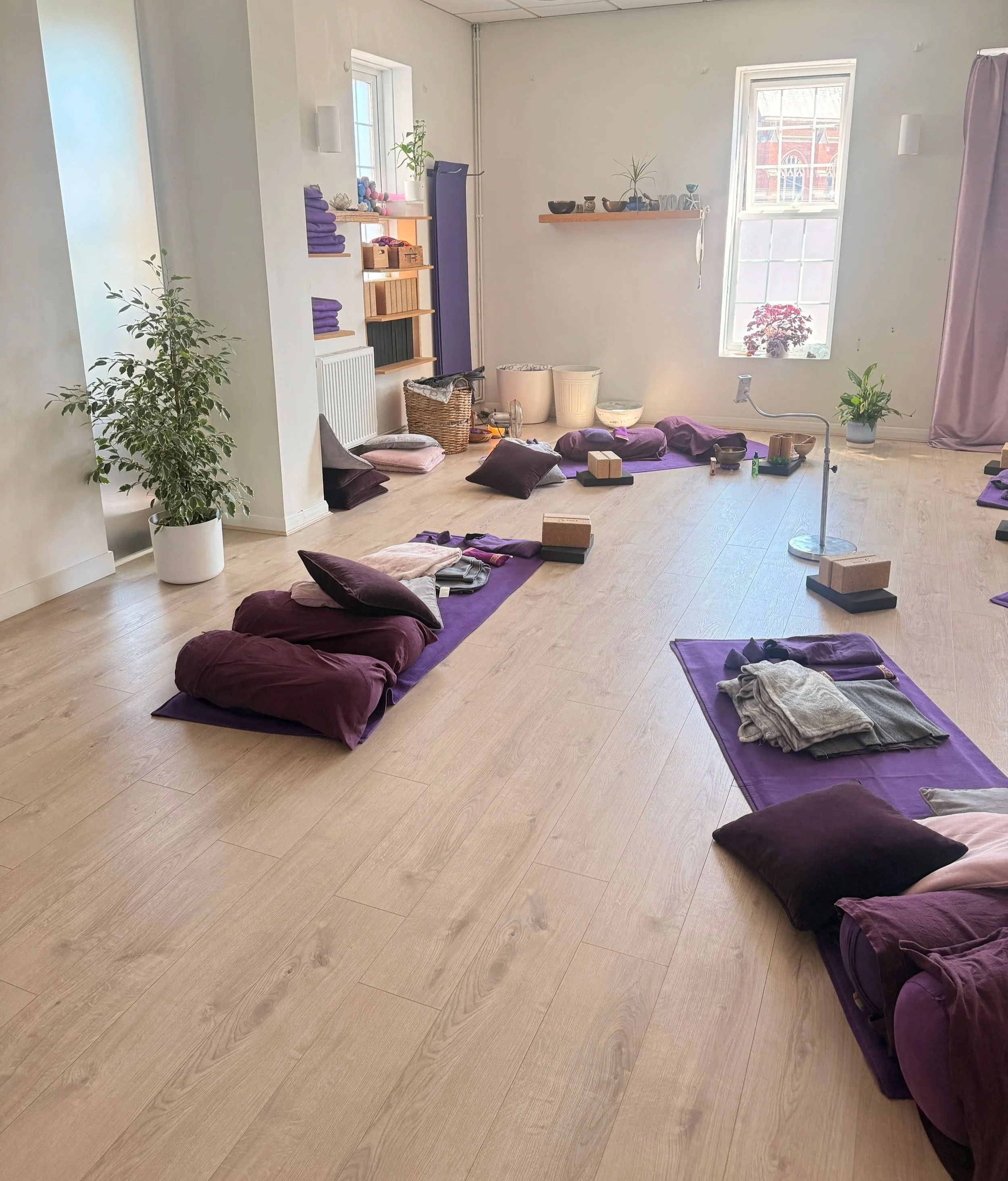
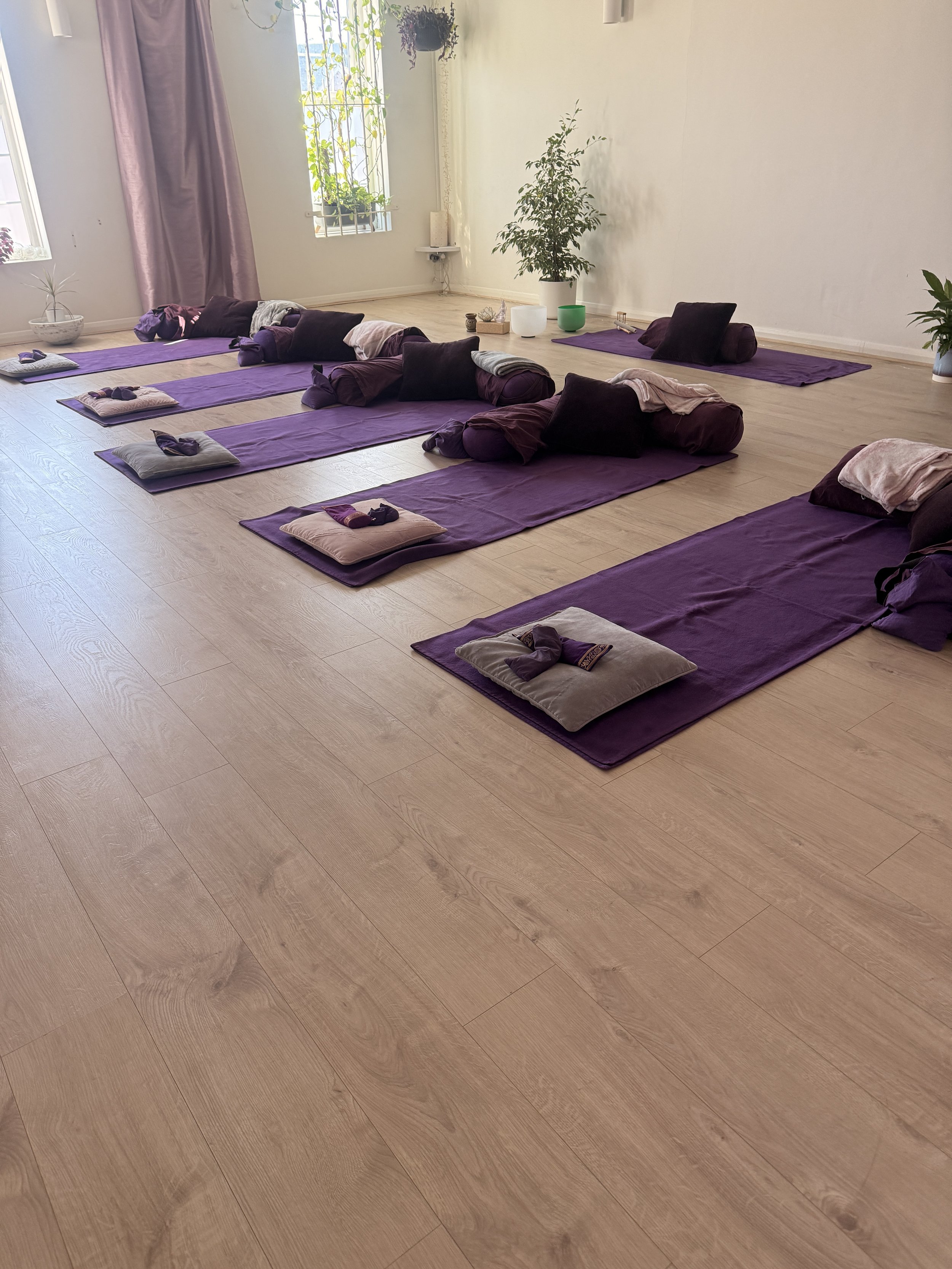
SYRN is taught at Soma Luna in Haywards Heath — a space designed for slower practice, rest and recovery.
Beautifully held practice
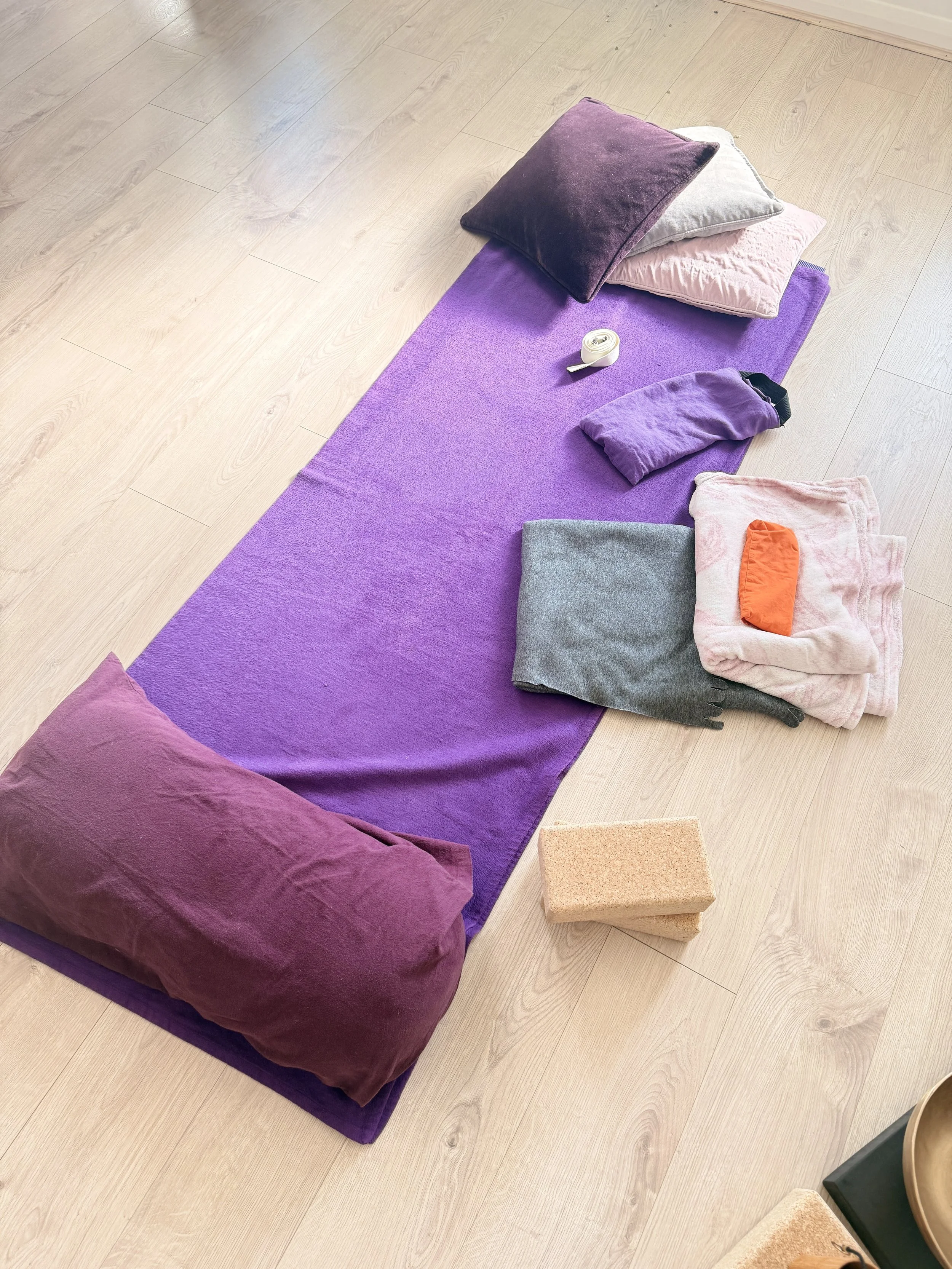
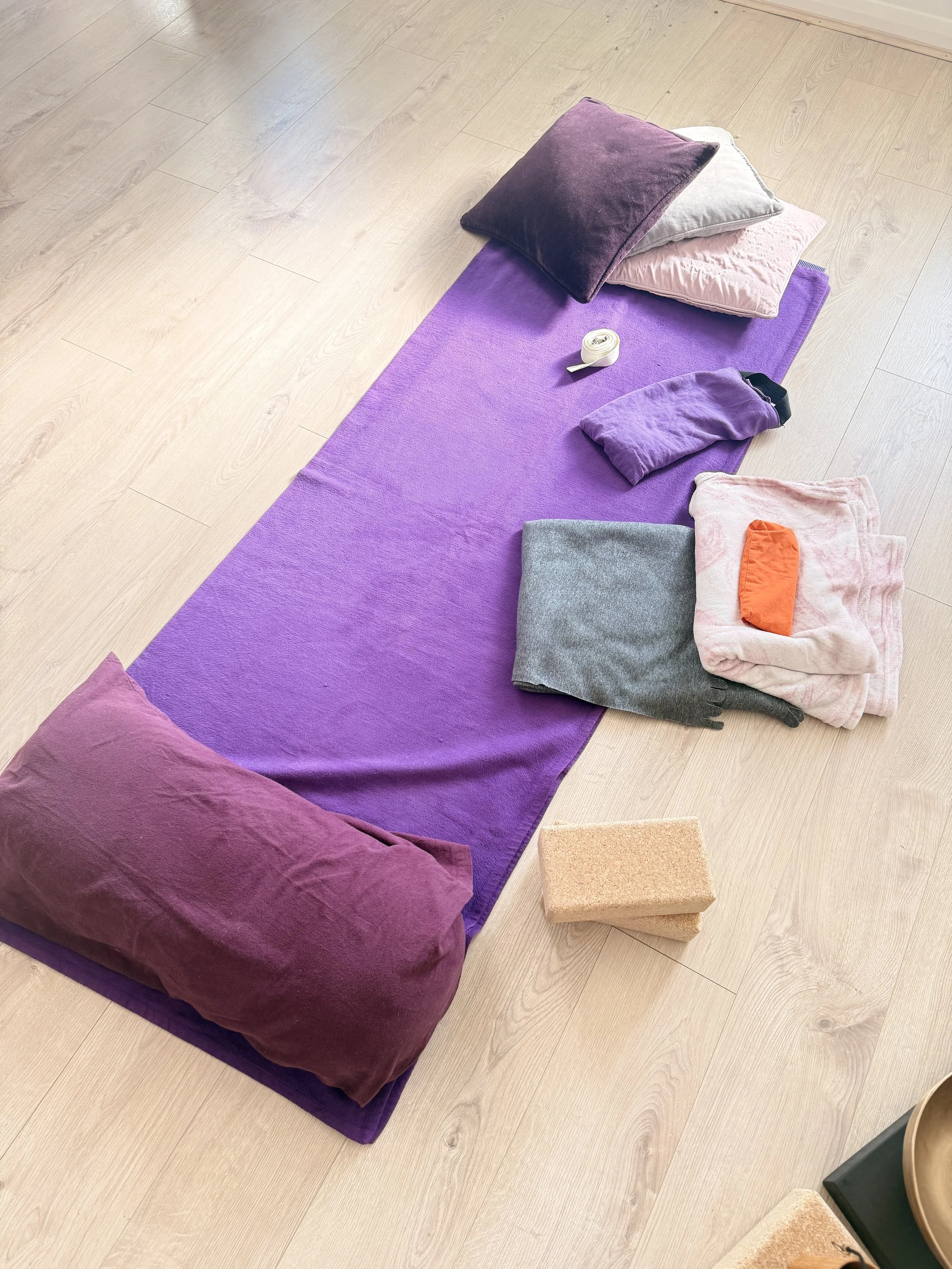
Bolsters, blankets, blocks and everything you need are already waiting for you. The room is set for comfort, not compromise.
Time to pause
Space between sessions to rest, talk, reflect, make notes or simply sit somewhere comfortable with a drink.
Food & refreshments
Nourishing food, drinks and refreshments are part of the experience, so you can settle in rather than rushing out.
Small by design
A maximum cohort of nine means plenty of space for questions, individual attention and conversation with me throughout.
MORE THAN A TRAINING ROOM
Learning can feel restorative too.
The October immersion is designed to have some of the ease of a retreat: thoughtful surroundings, time to lounge, beautiful practice spaces and access to the wider recovery facilities where available.
Not ready to commit to the professional training?
Join the October three-day Personal Immersion for £350 and
continue afterwards if it feels right.
Evidence-informed.
Practice-led.
SYRN brings contemporary research into conversation with yoga tradition, extensive yoga therapy training and many years of direct therapeutic teaching experience.
WHY THIS INFORMS MY TEACHING
The science has always been part of the practice.
My approach has been shaped by extensive, academically rigorous yoga therapy training through The Minded Institute, where contemporary neuroscience, physiology, psychology and yoga research were integrated directly into therapeutic practice.
I was not studying this material in isolation. Alongside that training, I was teaching consistently and working therapeutically with people several times each week — applying, observing, adapting and continuing to study what helped different people in real bodies and real lives.
I continue to follow current research in yoga, stress, pain, meditation and mind–body health. SYRN has developed from that ongoing relationship between evidence, clinical thinking and direct teaching experience.
01
Somatics — awareness through movement
+
SYRN begins with slow, exploratory movement rather than asking someone to become completely still immediately.
Attention to internal sensation can develop interoceptive and proprioceptive awareness — our capacity to notice what is happening within the body and how we are moving through space.
From a practical teaching perspective, movement gives someone who is restless, tense or highly activated somewhere to begin. Stillness does not have to be the first instruction.
02
Yin — the transition towards stillness
+
Yin introduces longer periods of relative stillness while the practitioner remains actively engaged with sensation, breath and attention.
Within SYRN it functions as a bridge between movement and supported rest: less external movement, but still a clear relationship with sensation and embodied attention.
Research into Yin Yoga specifically remains relatively limited, so the training distinguishes between what is directly supported by evidence, what can reasonably be inferred from broader yoga and movement research, and where claims should remain cautious.
03
Restorative Yoga — reducing effort
+
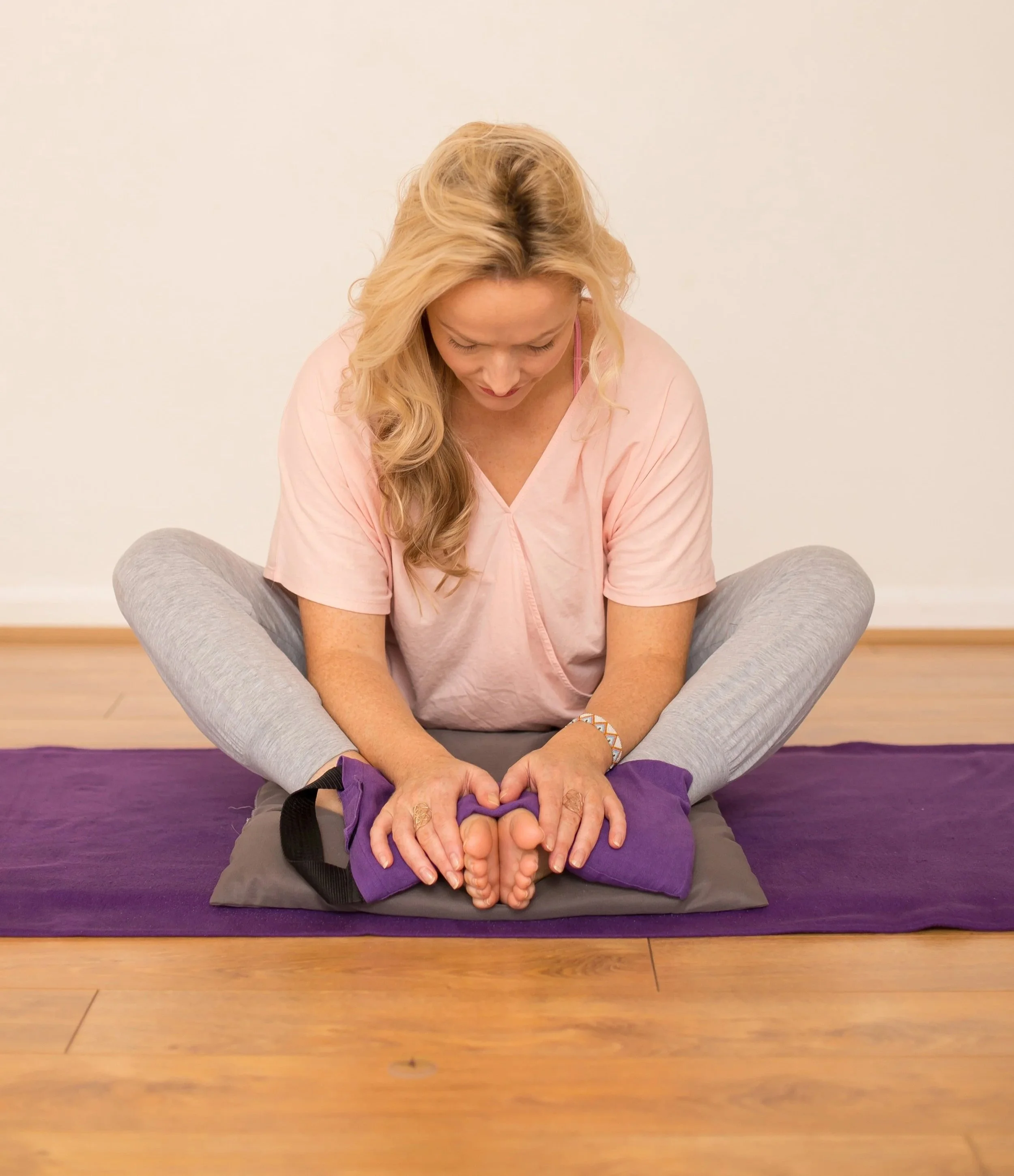
Restorative Yoga changes the physical conditions of practice. Props support the body so that considerably less muscular effort is needed to maintain the position.
The emphasis moves away from achieving a shape and towards comfort, support, breath, stillness and time.
Broader research into yoga and contemplative practices suggests that deliberately creating conditions of safety, reduced effort and sustained attention may support psychological and physiological recovery from stress.
04
Yoga Nidra — guided conscious rest
+
Yoga Nidra is a systematic guided practice usually undertaken lying down, with attention progressively directed inward.
Research into Yoga Nidra has expanded considerably. Recent systematic reviews suggest promising effects for stress, anxiety, mood and sleep, while also emphasising that study quality and methods remain variable.
Within SYRN, Nidra comes after movement, sensation and physical support. The intention is not simply to instruct someone to “relax”, but to prepare the conditions in which conscious rest may become more accessible.
05
What about NSDR?
+
Non-Sleep Deep Rest, or NSDR, is contemporary language used for guided practices that encourage deep physical rest while maintaining some degree of awareness.
It overlaps with aspects of Yoga Nidra, but the terms are not interchangeable. Yoga Nidra has its own history, traditions, structures and teaching methodologies.
Research into NSDR itself is still emerging, so within SYRN I teach Yoga Nidra as Yoga Nidra while also examining the growing modern interest in intentional waking rest.
06
Why does the sequence matter?
+
The distinctive element of SYRN is the progression:
Somatics → Yin → Restorative → Yoga Nidra
Each stage asks progressively less of the body while inviting attention increasingly inward.
Through years of teaching, I have found this particularly useful for people who struggle to move directly from the pace and demands of everyday life into complete stillness.
SYRN therefore gives teachers more than four sets of techniques. It offers a framework for deciding where to begin, what to offer next, how long to stay and how to guide someone towards rest without forcing it.
This progression is the framework I return to again and again.
Ready to experience SYRN?
Start with three immersive days for yourself, join the full professional training, or talk it through with me first.
PERSONAL IMMERSION
Come for yourself.
Three immersive days of Somatics, Yin, Restorative Yoga and Yoga Nidra at Soma Luna.
Love it and want to continue? Your £350 can be credited towards the full 40-hour Intensive, subject to availability.
Book the immersion · £35040-HOUR PROFESSIONAL TRAINING
Study the complete method.
Five in-person training days, online study, guided home practice and your 40-hour SYRN Method Intensive certificate.
A £195 deposit secures the early-booking rate, leaving £500 to pay.
NOT SURE WHICH ROUTE IS RIGHT?
Talk to me.
If you’re interested but have questions about your background, the training, the personal immersion or whether SYRN is right for you, I’m very happy to have a quick conversation.